> Main story
αρχαίες ρήσεις
by dimitris kouvaras
print designer / graphic designer
ancient phrases
_
The ancient greek literature has always been a beacon of culture and education for humanity. A characteristic feature is that it places man at the center of interest, with all his passions, weaknesses and ultimately his uniqueness. Through theater, philosophy, arts, the ancient greek spirit has shaped the course of man in history.
> Tee story
γυφτοπούλα
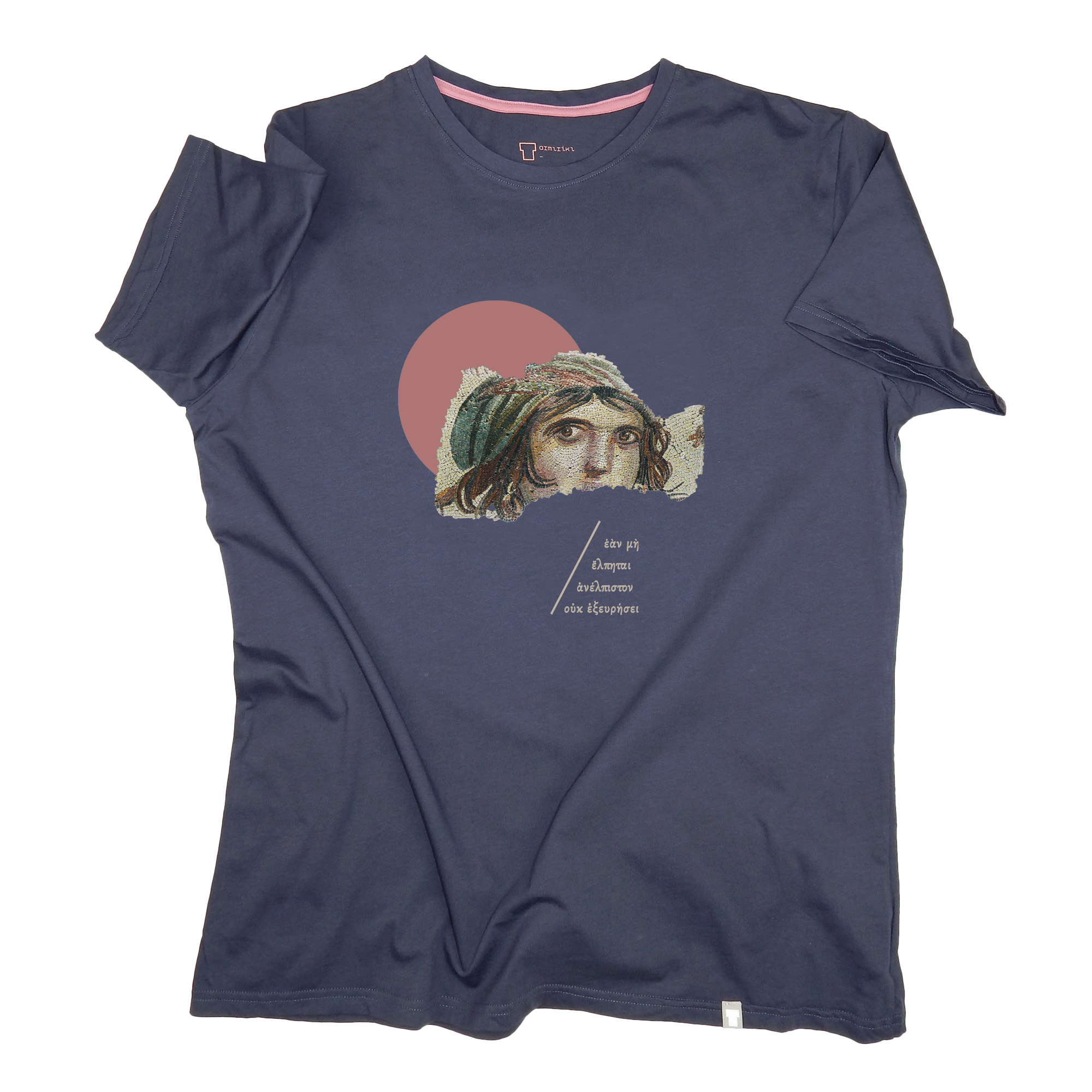
εάν μη έλπηται, ανέλπιστον ουκ εξευρήσει
_
it is attributed to the pre-Socratic, Ionian philosopher from Ephesus, Heraclitus (c. 540 — 480 BC), where it is stated that even though we do not control our luck, it is important to believe in ourselves, since with faith almost everything is possible. The drawing depicts the “Gypsy Girl” (2nd c. AD), a Hellenistic mosaic from the ancient city of Zeugma on the Euphrates river. It probably depicts either Gaia, the goddess of the Earth, or a Maenad, a nymph-chorister of the god Dionysus.
Other Tees of this story :
1.1 / φιλία
1.1 / φιλία
φιλία
γυφτοπούλα
γυφτοπούλα
γυφτοπούλα
γυφτοπούλα
φαγιούμ
φαγιούμ
φαγιούμ
6.2 / το τίμημα της ελευθερίας
το τίμημα της ελευθερίας
6.1 / το τίμημα της ελευθερίας
2.2 / η έκφραση του ωραίου
2.2 / η έκφραση του ωραίου
3 / οι σκάλες των ενετών
5.1 / ευ ζην
5.2 / ευ ζην
5.3 / ευ ζην
4.2 / ελπίδα
4.1 / ελπίδα
2.0 / Μαραθώνας 490 π.Χ.
1.2 / αρχαία αιγείρα
γυφτοπούλα
35.00€
100% natural cotton
pre-washed/softened
designed & fabricated
in our workshop
Nafplio/Greece
> Main story
αρχαίες ρήσεις
by dimitris kouvaras
print designer / graphic designer
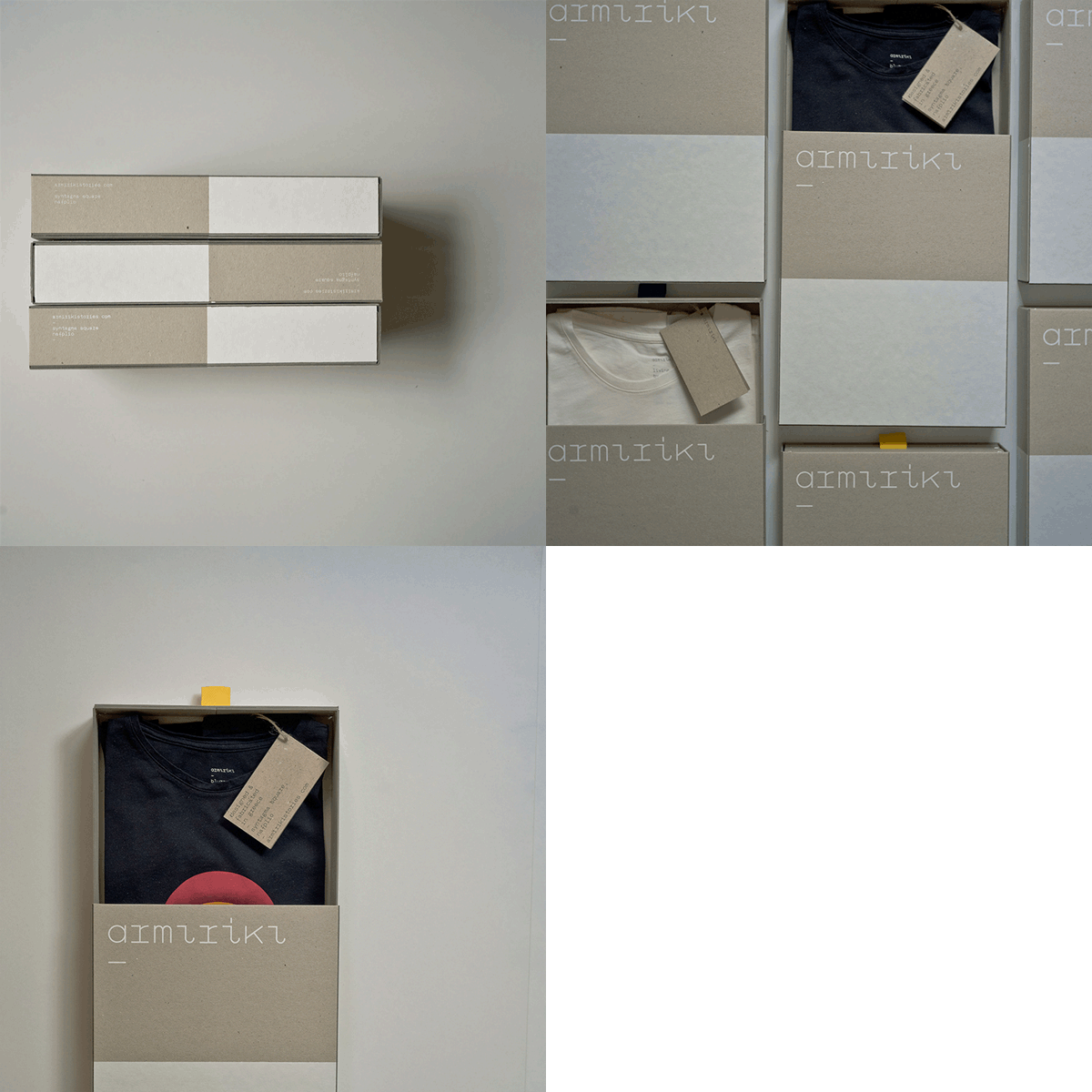
100% natural cotton / cut, sewn, embroidered, handmade screen-printed & prewashed locally in our workshop in Nafplio, Greece.
> Tee story
γυφτοπούλα
εάν μη έλπηται, ανέλπιστον ουκ εξευρήσει
_
it is attributed to the pre-Socratic, Ionian philosopher from Ephesus, Heraclitus (c. 540 — 480 BC), where it is stated that even though we do not control our luck, it is important to believe in ourselves, since with faith almost everything is possible. The drawing depicts the “Gypsy Girl” (2nd c. AD), a Hellenistic mosaic from the ancient city of Zeugma on the Euphrates river. It probably depicts either Gaia, the goddess of the Earth, or a Maenad, a nymph-chorister of the god Dionysus.